
Mission
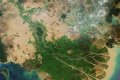
The mission of the Department of Physical Geography is to be at the forefront of research in Earth Surface Dynamics. Our knowledge and understanding of Earth’s continental and coastal systems contribute to a safe and healthy living environment and to sustainable management of Earth’s natural resources for the next generations. Through our work, we contribute in particular to number 6, 13, 14 and 15 of the Sustainable Development Goals as set by the United Nations in 2015.

Impact
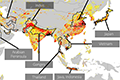
The Department of Physical Geography focusses on societal needs in six broad impact themes aligned with our research: freshwater supply, climate change, natural disasters, in particular flood risk, ecosystem integrity & - services, and environmental effects on well-being. Our research contributes directly to the knowledge and awareness needed for societal target groups to cope with the continuously changing physical world.
Research
Our research is organised into a coherent programme Earth Surface Dynamics with six research lines:


Connection
Within the Faculty our department has strong ties with research activities of the departments of Earth Sciences (palaeoclimatology, sedimentology, natural hazards, biogeochemistry) and Sustainable Development (water resources, ecosystems, sustainable land use).
Within the University our department supports the Community Water, Climate & Future Deltas. This further enhances interdisciplinary research activities across Faculties.

Teaching
The Department of Physical Geography offers a joint educational curriculum of one BSc programme, including an honours programme, and four MSc programmes with the Department of Earth Sciences. All PhD candidates contribute to the courses taught by the Department of Physical Geography. We consider teaching to be a key component of a candidate’s academic development. This contribution involves assistance in practicals, fieldwork, assessments, and occasional guest lectures, all under supervision of the course coordinator. Also, PhD students may co-supervise BSc and MSc projects that fit within their own research.
Follow us
Twitter: @UU_PhysGeog and YouTube: UUGeosciences