

Master's students
MASTER PROJECTS
Students with a background in chemistry or physics are encouraged to explore the possibilities of doing a Bachelor or Master research project at the Van 't Hoff Laboratory.
Below you can find brief descriptions of the Master research projects that can currently be completed in our group. Bachelor projects can be found on the Bachelor projects page.
If you are interested in a project or topic, please contact the student coordinator, Matthijs Alting for more information.
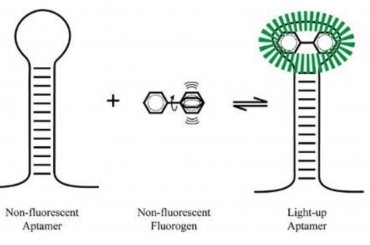
The influence of non-specific DNA on in vitro transcription regulation
Transcription is the process by which a gene segment on DNA is copied into messenger RNA. This involves different types of proteins, such as the transcription machinery (RNA polymerase) and regulatory proteins (transcription factors).
Click for more
 Amanda van der SijsFCC PhD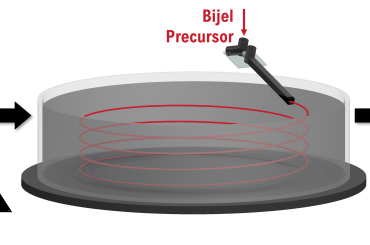
Sustainable Synthesis of Fluid-bicontinuous Gels with Controlled Liquid-liquid Domain Sizes
High-surface area separation membranes are important materials to supply people with clean water in times of increasing global water scarcity. A new and promising material for the fabrication of high-surface area membranes are fluid-bicontinuous gels. In this project, we design a new bijel precursor composition for the fabrication of high-surface area separation membranes.
 Henrik SiegelFCC PhD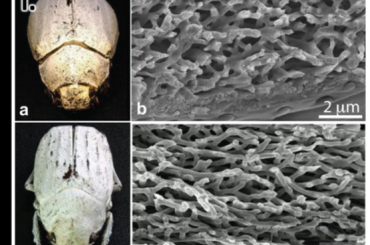
Controlled Anisotropy in Bijels
The cooling of buildings requires an enormous amount of energy, and due to a warming climate the cooling needs will increase over the coming decades. Passive radiative cooling of a building could be achieved by optimizing the optical properties of the walls and roof. In our group a similar interwoven structure is extensively studied. The structure that forms during spinodal phase decomposition can be kinetically trapped through the adsorption of nanoparticles to the interface, forming a bicontinuous interfacially jammed emulsion gel (bijel). In this project we want to study the potential of introducing controlled anisotropy in a bijel.
 Geert SchulpenFCC PhD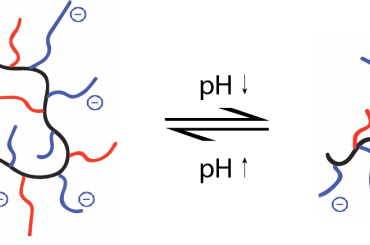
Cooperative transitions in simple macromolecules
In the group of Willem Kegel, MSc research projects are available on cooperative transitions in simple soft-matter systems such as hydrophobic polyelectrolytes and polymers containing side groups that interact with certain ligands. There are theoretical predictions and experimental indications that these systems can undergo strongly cooperative transitions that are mediated by ligand binding.
 Alex van SilfhoutFCC