

In Utrecht, students watch beyond the borders of disciplines. Students and top researchers work towards a better world, together and in tight communities.
How we are working towards a better world
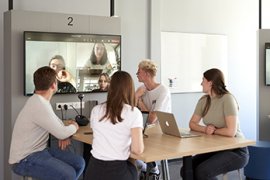
Designing classrooms for the future
How we teach should determine what our learning spaces look like, not the other way around. In the project Future Learning Spaces we design new formats for the physical learning environment.
Big ambitions, small steps
Utrecht University aims to increase diversity in its student intake. Communications Consultant Irene Mol tells about the experiences so far and the plans for the upcoming four years.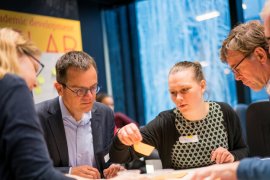
Inspiring and empowering our teachers
Our Centre for Academic Teaching and Learning connects everyone within the university who works at the continuous improvement of education.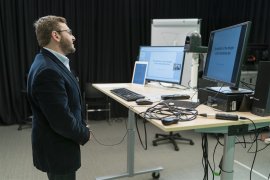
Remote teaching
How can teachers adapt their education to a constantly changing environment? What is needed to adapt teaching materials as well as possible? Here, we share our insights and resources.


Facts and figures
Students appreciate the many options available within our 59 bachelor's programmes.
Our over 150 master’s programmes form a cross-section off the full scientific spectrum.
We believe in lifelong learning. Therefore, we offer over 240 programmes for professionals.
With some 110 nationalities working and studying closely together, students learn to operate in an international environment from the outset.
Thinkers and doers in education
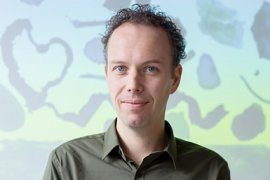
Writing for Wikipedia
Erik van Sebille was looking for other, more engaging forms of assessment. The result? His students wrote 40 brand new Wikipedia articles on oceanography, as part of their course assignment.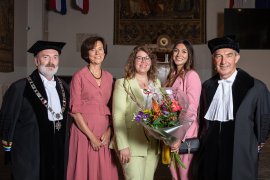
Supporting refugees
Kimia Milani Sabzewar is the winner of the Exceptional Extracurricular Achievements Award. With her new foundation, she is fully committed to supporting refugees and their children.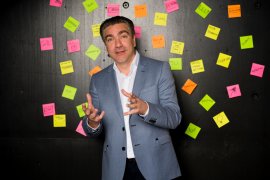
“Bachelor's students are more capable than one might think”
Niels Bovenschen’s ambition is to engage undergraduate students in science by creating synergy between education and scientific research. His students work with real life datasets.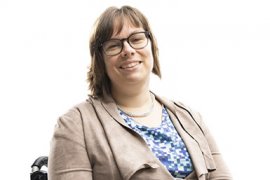
Network for students and staff with a disability
Maranke Wieringa is co-founder of Accessible Academia. "There are a lot of creative solutions available that do not need to cost a great deal of time and effort, and which have a lot of impact with just a few minor changes."


